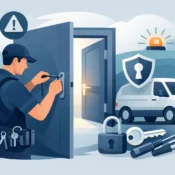

Why Change Door Locks After Moving In

Why Change Door Locks After Moving In
The boxes are still stacked in the hall, you cannot find the kettle, and someone hands over a set of keys with a quick, "That should be all of them." That is exactly why many people change door locks after moving. It is one of the few jobs that gives you immediate control of the property from day one.
A new home should feel secure, not uncertain. If you do not know who still has a working key, whether the locks meet current standards, or if the door hardware has hidden wear, replacing or updating the locks is a sensible first step.
Should you change door locks after moving?
In most cases, yes. Not because something is definitely wrong, but because you are starting from a position of incomplete information. Previous owners, tenants, cleaners, tradespeople, neighbours, family members, dog walkers or letting agents may all have had access at some point. Even if everyone involved is honest, keys get copied, lost and forgotten.
This matters even more if the property has changed hands several times, has been rented out, or stood empty for a while. Vacant homes are often accessed by multiple parties during sale, maintenance and viewings. By the time you collect the keys, there may be no reliable record of who has had one.
If you have just moved into a flat or house and want certainty, changing the locks removes the guesswork straight away.
When changing the locks is urgent
Sometimes this is not just a good idea. It should move to the top of the list.
You did not receive a full, believable set of keys
If the handover felt vague, or you were told a key is missing, assume copies may still be out there. That does not automatically mean risk, but it does mean uncertainty you can fix quickly.
The property was previously tenanted
Rental properties often have a long chain of occupants and managed access. Keys may have been shared between tenants, contractors and agents over time. Landlords should take this seriously between tenancies, and new tenants should ask what has been done.
There are signs of damage or poor security
A stiff lock, loose handle, misaligned door, snapped thumbturn or worn cylinder all suggest the lock system may not be in great shape. A locksmith can check whether the problem is simple wear or a security weakness.
You have moved in after a break-in or attempted burglary
If the property has a recent history of forced entry, lock replacement should be immediate. In those cases, it often makes sense to review the door, frame, handles and any vulnerable windows at the same time.
Change or rekey - what is the better option?
People often assume a full replacement is the only answer. It is not always that simple.
If the existing lock is in good condition and the type allows it, rekeying can be a practical option. That changes the internal configuration so old keys no longer work. It can be quicker and more cost-effective than fitting entirely new hardware.
On the other hand, if the current lock is low quality, damaged, outdated or not compliant with insurer expectations, replacing it is usually the smarter move. This is where a proper inspection helps. The best option depends on the lock type, condition of the door and what level of security you want.
For many homeowners, moving house is also the right moment to upgrade rather than simply replace like for like.
Which locks should you check first?
Your front door is the priority, but it should not be the only one.
Front and back doors
These are the obvious entry points and should be dealt with first. On uPVC and composite doors, that often means checking the euro cylinder and multi-point locking mechanism. On timber doors, it may involve mortice locks, night latches or both.
Side doors and garages with internal access
These are often overlooked, especially during the stress of moving. A side entrance with an old cylinder can be the weak point in an otherwise secure property.
Patio and French doors
If they have key-operated locks, include them in the review. Access at the rear of a property tends to be less visible to neighbours and passers-by.
Shared entrance considerations for flats
You may not be able to change communal entry systems yourself, but you can secure your own flat door. If the building entrance feels poorly managed, raise it with the freeholder, managing agent or landlord.
What standard should your locks meet?
Not every lock is equal. Some are basic, some are designed to resist snapping, drilling and other common attack methods, and some are simply past their best.
For many external doors, an upgrade to British Standard or insurer-recognised locks is worth considering. This is especially relevant for euro cylinders on uPVC and composite doors, where anti-snap protection can make a real difference.
That said, the right solution depends on the door itself. There is no point fitting a better cylinder while ignoring a weak handle, badly fitted door or failing mechanism. Security works as a system, not a single part.
Can you do it yourself?
If you are practical, some basic cylinder changes can be done yourself. But moving house is one of those times when a rushed DIY job can create more problems than it solves. A poorly sized cylinder, misaligned lock or incorrect fitting can leave the door less secure, not more.
There is also the issue of identifying what you actually have. Many people call a lock a "Yale" or assume every door uses the same setup. In reality, lock types vary a lot, and fitting the wrong part is easy if you are guessing.
A locksmith will usually identify the lock, explain whether it needs changing or upgrading, and fit it properly without damage. If you have just taken possession and want it sorted quickly, that is often the fastest route.
How quickly should you change door locks after moving?
Ideally, on the day you move in or as soon as possible after. The longer you leave it, the longer you are relying on an unknown key history.
If you cannot do every lock at once, start with the main entrance and any rear access doors. Then work through secondary doors, garages and vulnerable points over the next few days.
For landlords, the timing matters between tenancies as well. Waiting until after a new tenant moves in creates avoidable risk and unnecessary stress.
What a locksmith should tell you before starting
If you need help, you want a straightforward answer, not pressure. A good local locksmith should explain what needs doing, what can wait, and what it will cost before work begins.
Look for clear pricing, direct contact and someone who can assess the condition of the lock rather than simply swapping parts. If a lock can be repaired safely, you should be told. If an upgrade is worthwhile, you should be told why.
That practical approach is especially useful after a move, when you are already paying for removals, utilities and a dozen other unexpected costs.
Is this also the right time for a smart lock?
Sometimes, yes. If you want keyless access, temporary codes for family, or easier control over who can enter, moving in is a good time to install a smart lock.
But it depends on the door, the lock type and how you use the property. Smart locks are convenient, though they are not the right answer for every home. Some people still prefer a high-quality mechanical setup for simplicity and reliability. Others like a smart lock on the main entrance and standard locks elsewhere.
The sensible option is the one that suits your property and daily routine, not the most expensive one.
A simple next step that makes the house feel yours
Painting can wait. New furniture can wait. Even the boxes can wait for a day. If you want one job that immediately improves control, confidence and security, change the locks first.
If you have moved into a property in Crawley or nearby and want it sorted without delay, SaveMeLocksmith can help with lock changes, upgrades and a clear assessment of what your doors actually need. The right lock fitted properly gives you something valuable on day one - certainty.

Recent Posts
7 Best Locks for Front Doors
Emergency Locksmith Callout Guide