
7 Best Locks for Front Doors
A front door lock usually gets attention only when it sticks, fails or leaves you feeling exposed after a break-in attempt. If you are comparing the best locks for front doors, the right choice depends on your door type, how you use the entrance, and how much security you actually need rather than what sounds most impressive on the box.
Most homes do not need the most expensive lock on the market. They need the correct lock fitted properly, matched to the door, frame and hardware around it. A strong lock on a weak door is only part of the job, and a poor installation can turn a good product into a problem.
What makes the best locks for front doors?
The best front door locks do three things well. They resist forced entry, they work reliably every day, and they suit the door they are fitted to. That last point matters more than many people realise.
A timber front door can often take a mortice sashlock or deadlock. A uPVC or composite door usually relies on a euro cylinder working with a multi-point locking system. Some homes benefit from a night latch for convenience, while others want a smart lock for managed access. There is no single lock that is best for every property.
You should also think about who uses the door. A family home with children coming and going has different needs from a rented flat, and a landlord may prioritise controlled access and straightforward lock changes. If you have recently moved in, had keys go missing or suffered attempted entry, security and speed matter more than cosmetic upgrades.
1. British Standard mortice sashlocks
For solid timber front doors, a 5 lever mortice sashlock is still one of the strongest all-round choices. It sits inside the door, which makes it harder to tamper with than many surface-mounted options. A British Standard model is widely recognised as a strong security upgrade for traditional wooden doors.
This type of lock combines a latch and a deadbolt, so you can shut the door behind you and also lock it fully with a key. It is a practical choice for main entrances where you want proper day-to-day use rather than a bolt that only locks when thrown.
The trade-off is fitting. Mortice locks need accurate cutting into the door, and poor alignment can lead to stiffness, premature wear or a weak fit. They are excellent when installed correctly, but not every door is suitable for retrofitting one.
2. Mortice deadlocks
A mortice deadlock is similar in strength to a sashlock, but it does not have the spring latch function. It is locked and unlocked by key rather than acting like a normal handle-operated latch. That makes it a good secondary lock on a timber front door.
Many homeowners pair a deadlock with another locking point for added resistance. If your door already closes on a latch and you want an extra layer of security overnight or when the property is empty, this is often a sensible option.
The downside is convenience. Because it is key-operated on its own, it is not always the best standalone choice for a busy entrance.
3. Night latches
A night latch is common on many front doors in flats and houses, especially older timber doors. It automatically latches when the door closes, which is helpful if you want the door secured without remembering to turn a key every time.
Used on its own, a basic night latch is not usually the strongest security setup. Used with a proper mortice lock, it can be far more effective. That combination gives you quick everyday locking and a stronger deadlocking option when needed.
Not all night latches are equal. Some have better cylinder protection, internal safety features and stronger cases than cheaper versions. If your current one feels loose, rattly or easy to bypass, replacement may be worth considering.
4. Euro cylinder locks for uPVC and composite doors
If you have a uPVC or composite front door, the lock you are most likely dealing with is a euro cylinder. This sits within a multi-point locking mechanism that secures the door at several points along the frame.
The cylinder is often the weak point, not the full mechanism. Older or low-grade cylinders can be vulnerable to snapping, drilling or picking. Upgrading to an anti-snap, anti-drill and anti-pick cylinder is one of the most effective security improvements for this type of door.
This is where many people get caught out. They assume the multi-point system means the whole door is highly secure, but if the cylinder can be attacked quickly, the rest of the system may not get the chance to do its job. A quality cylinder is often one of the best-value upgrades available.
5. Multi-point locking systems
A multi-point locking system is standard on many modern uPVC and composite front doors. When you lift the handle and turn the key, bolts, hooks or rollers engage at multiple points. That spreads security up and down the door rather than relying on one central lock.
When these systems are in good condition, they offer strong protection and better door sealing. They are particularly useful on taller doors that benefit from multiple contact points.
The issue is wear. If the door drops slightly, the mechanism can become hard to lift or lock. Many people think the cylinder is faulty when the real problem is alignment, keeps, handles or the gearbox inside the strip. In those cases, replacing only the cylinder may not solve the issue.
6. High-security rim cylinders
If your front door uses a night latch, the rim cylinder on the outside can be upgraded. A high-security rim cylinder improves resistance against forced attack and is often a better option than keeping a cheap standard cylinder in place.
This is not the first lock people ask about, but it can make a noticeable difference on doors where the night latch is used daily. If the latch itself is decent but the cylinder is old or basic, targeted replacement can improve security without changing the whole setup.
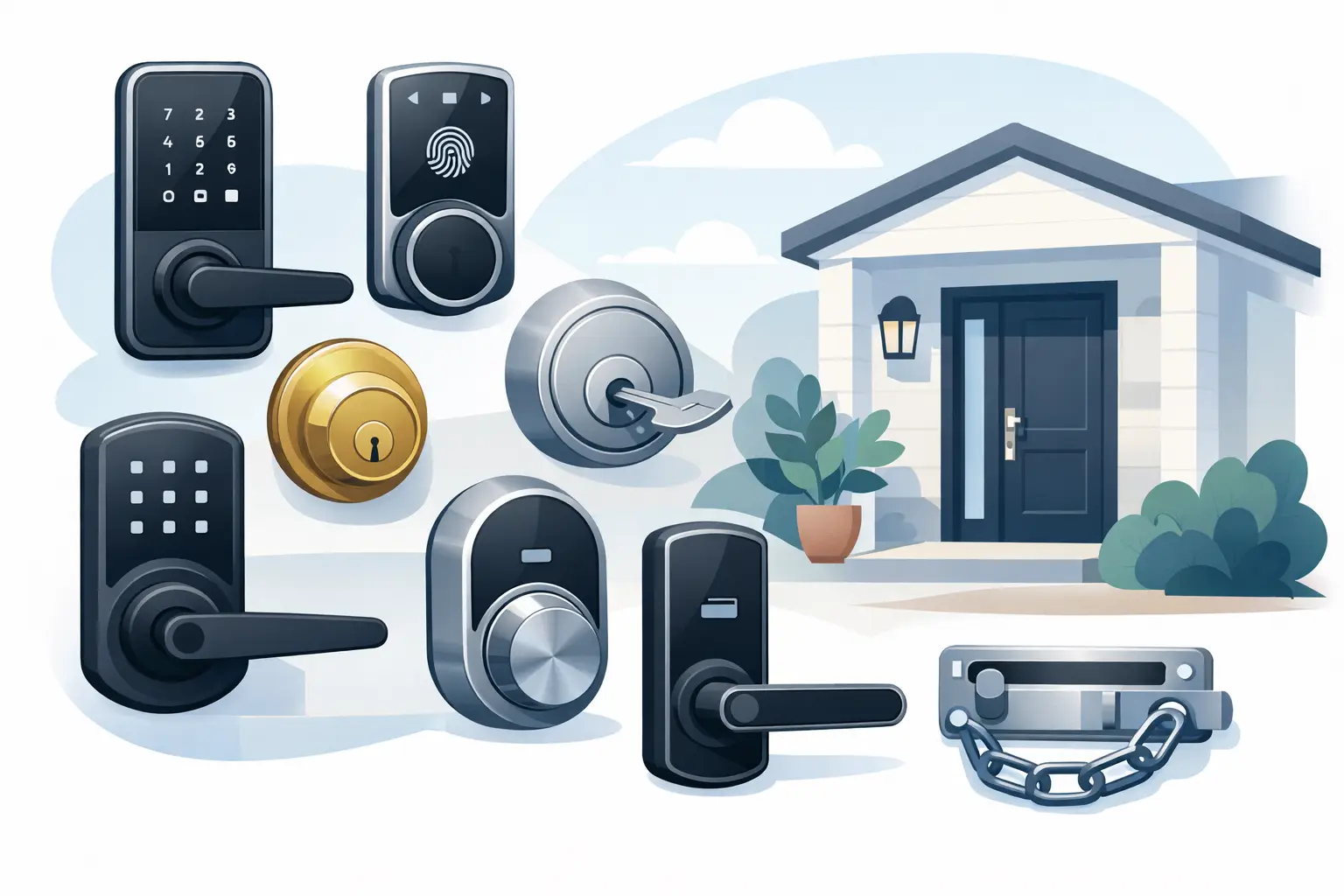
7. Smart locks
Smart locks are now a realistic front door option, not just a gadget. For some households they add real convenience, especially if you want keyless entry, temporary access for visitors, or better control over who can get in.
They are not automatically the best choice for every home. Battery dependence, app setup, door compatibility and user habits all matter. Some smart locks work well as part of an existing secure lock setup, while others replace the main locking function entirely.
The right question is not whether smart locks are modern. It is whether they are reliable for your household. If you want simple, proven hardware with minimal upkeep, a high-quality mechanical lock may still be the better fit. If access control is a daily headache, smart locking can be worth it when installed properly.
Which front door lock is best for your property?
For a solid wooden front door, a British Standard mortice sashlock or a mortice deadlock paired with a night latch is often the safest route. For a uPVC or composite door, upgrading the euro cylinder and checking the multi-point mechanism usually gives the biggest improvement.
If you live in a flat, convenience may matter just as much as security. A good night latch with a secure additional locking point can make everyday use easier without cutting corners. If you are a landlord, you may value locks that are straightforward to change between occupancies and less likely to generate emergency call-outs due to stiffness or failure.
If your lock already feels unreliable, security is only half the issue. A front door that sticks, jams or needs force to lock can leave you stranded outside or unable to secure the property properly. In those cases, repair, adjustment or replacement should be dealt with before it becomes an emergency.
Signs your current lock needs upgrading
A lock does not need to fail completely before it becomes a risk. If the key is difficult to turn, the handle is hard to lift, the latch catches badly or the cylinder feels loose, those are all warning signs. After a burglary attempt, lost keys or a house move, replacement is often the sensible option.
Age also matters. Many older front door locks were fitted before anti-snap cylinders became standard or before current insurance expectations were common. What was acceptable ten years ago may now be the weak point in your door.
Fitting matters as much as the lock itself
Even the best locks for front doors can underperform if they are badly fitted. Misaligned keeps, loose handles, poor screw fixings and worn frames all affect security. The lock should work smoothly, engage fully and suit the thickness and material of the door.
That is why a quick visual comparison online rarely tells the full story. Two homes can need completely different solutions, even when the doors look similar from outside. A proper assessment usually saves time, money and repeat problems.
If you are unsure what your front door currently has, a locksmith can identify the lock type, check whether it meets current standards and advise whether a repair or upgrade makes more sense. For homeowners in Crawley and nearby areas, SaveMeLocksmith often sees the same issue: people replace the wrong part, then still end up with a door that will not lock properly.
A better front door lock should leave you with two things - stronger security and less hassle every time you come home.

Recent Posts
7 Best Locks for Front Doors

Emergency Locksmith Callout Guide